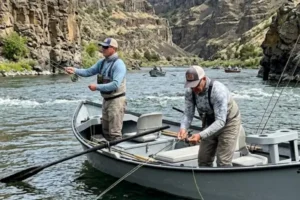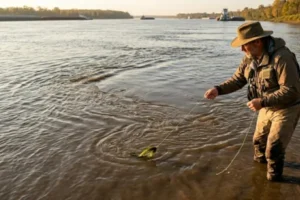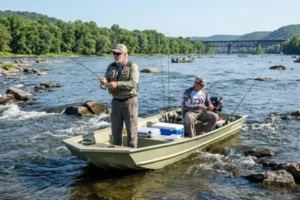
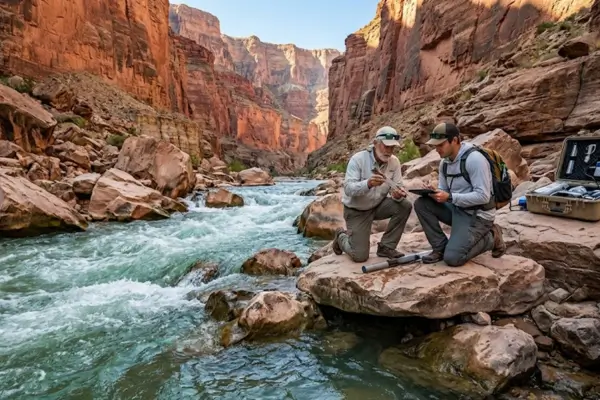
The Colorado River features a wide variety of environments throughout its course, but rocky sections stand out for creating very specific conditions that influence fish movement and distribution. In these areas, the combination of strong current, rock formations, and constant depth variations creates a dynamic environment that directly affects fish behavior.
Fish use rocky structures as protection zones, resting areas, and strategic feeding locations. In addition, changes in water flow create unique circulation patterns that concentrate natural food and favor the presence of several predatory species.
For this reason, understanding how the Colorado River behaves in rocky areas is essential for correctly interpreting fish distribution and locating more productive spots throughout the river.
Dynamics of the Colorado River in Rocky Formation Areas
Rocky sections of the Colorado River display highly variable water flow.
While some areas feature strong and continuous current, others create small stability zones between rock formations.
This dynamic allows fish to position themselves strategically in locations where they can balance movement, feeding, and energy conservation.
Rock formations also constantly alter current direction, creating multiple microenvironments throughout the river.
This structural diversity greatly increases the number of productive fishing areas.
Influence of Channelized Currents Between Rocks on Fish Behavior
Channelized currents form when water flows through narrow spaces between large rock formations.
In these areas, current speed usually increases, creating natural movement corridors.
Many fish use the edges of these currents to conserve energy while monitoring food carried by the flow.
The boundaries between strong current and moderate flow also frequently concentrate predatory species.
Learning to identify these zones greatly improves environmental reading and fish location.
Identifying Natural Crevices and Shelter Zones
Natural crevices between rocks function as important shelter areas throughout the Colorado River.
These spaces provide protection from strong current and create more stable sections within the environment.
Many species remain close to these formations during much of the day, especially during periods of stronger light or heavier flow.
In addition, crevices often accumulate small aquatic organisms and baitfish, increasing feeding potential nearby.
Depth Variations Created by Rocky Structures
Rock formations create constant depth changes throughout the river.
In many sections, large rocks form depressions, narrow channels, and abrupt bottom drop-offs.
These changes directly influence water circulation and fish positioning.
Deeper areas often function as resting and holding zones, while intermediate sections commonly display greater fish movement.
Transitions between different depths also become highly productive natural corridors.
Whirlpool Areas and Their Effects on Species Concentration
Whirlpools appear when current encounters rocky obstacles and rapidly changes direction.
These areas create unique water circulation patterns and frequently concentrate natural food carried by the main flow.
As a result, many species remain near these locations waiting for feeding opportunities.
Whirlpools also usually feature softer current compared to the main river flow, providing greater stability for fish.
Relationship Between Water Oxygenation and Fish Activity
Rocky sections of the Colorado River typically feature excellent water circulation and oxygenation.
The intense current movement around rocks increases oxygen exchange, creating highly favorable conditions for many species.
In many situations, highly oxygenated areas display greater fish activity, especially during warmer periods.
Strong circulation also helps distribute natural food throughout different river sections.
Transition Points Between Fast Water and Calm Areas
Transition zones between fast water and calmer sections are among the most productive locations on the Colorado River.
These areas allow fish to remain close to the main current without constantly dealing with heavy flow.
Natural food transported by the water also tends to accumulate in these transition zones.
Many species use these locations as feeding, resting, and travel areas throughout the day.
Fish Distribution in Relation to Natural Barriers
Natural barriers formed by rocks directly influence species distribution.
In many cases, fish use the protected side of formations to remain in lower-effort areas.
Large barriers also alter current flow and create different circulation zones around the structures.
This diversity of microenvironments allows species with different behaviors to occupy very close areas simultaneously.
Reading Irregular Surfaces on the River Bottom
The irregular bottom is one of the main characteristics of rocky sections on the Colorado River.
Rocks of different sizes create constant changes in water circulation, depth, and current formation.
Learning to interpret these irregularities greatly improves the ability to identify productive areas.
Irregular surfaces also frequently concentrate natural food and create holding zones for many species.
Influence of Light in Rocky Sections
Light incidence varies greatly in rocky areas due to irregular depth and constant water movement.
During certain times of the day, shaded regions near rock formations become highly used by fish.
Changes in light conditions throughout the day also directly influence fish movement between shallow and deep areas.
Observing these changes greatly helps environmental interpretation.
How Current Shapes Natural Corridors
The Colorado River current shapes natural travel corridors around rocky structures.
These corridors function as movement routes for many species during feeding and travel periods.
Changes in water speed also create specific zones where fish can remain with greater stability.
Understanding how current circulates between rocks significantly improves river interpretation.
Importance of Side Areas in Rocky Sections
Side areas near rocky formations often feature more moderate flow.
These regions provide greater stability and allow fish to remain close to feeding zones without constantly facing strong current.
Many small aquatic organisms also concentrate in these locations.
As a result, predatory species frequently move throughout the side sections of rocky environments.
Fish Adaptation to Flow Changes
Fish behavior constantly changes according to current intensity.
During periods of stronger flow, many species seek protected regions close to structures.
When current becomes more moderate, fish tend to move more freely between different depths.
This constant adaptation directly influences fish distribution throughout the river.
Common Mistakes When Reading Rocky Sections
Some mistakes greatly reduce environmental interpretation efficiency:
- Ignoring small current changes
- Fishing only in the deepest areas
- Overlooking protected side zones
- Failing to observe whirlpools and transition areas
- Staying too far from main structures
- Ignoring the influence of water oxygenation
- Failing to adapt reading according to river flow
Avoiding these mistakes significantly improves the ability to identify productive fishing areas.
Rocky sections of the Colorado River create an extremely dynamic and productive environment for many fish species.
The combination of channelized currents, shelter zones, depth variations, and whirlpool areas directly influences fish distribution and behavior throughout the river.
In addition, factors such as oxygenation, water circulation, and natural barriers help create multiple productive microenvironments.
With continuous observation and proper interpretation of rocky structures, anglers can identify far more efficient fishing locations and better understand the behavior of this important river system.