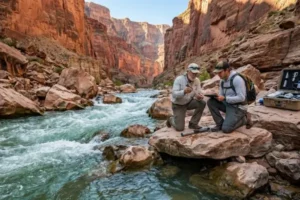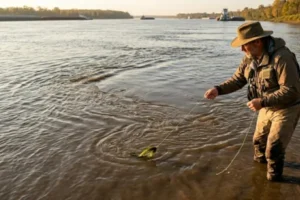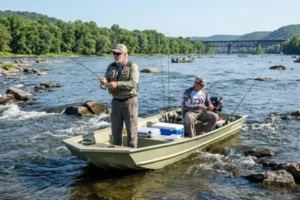
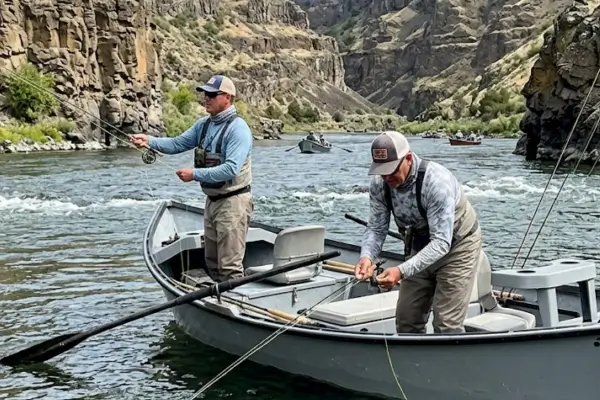
The Snake River features one of the most interesting river formations in North America, with a wide diversity of currents, natural contours, and submerged structures distributed throughout its course. In many sections, the combination of variable depth, rocky formations, irregular shorelines, and constant changes in water speed creates highly dynamic environments for different fish species.
In addition, the behavior of the river continuously changes according to current intensity, water volume, light conditions, and weather patterns. These variations directly influence species positioning and the formation of productive zones at different times of the day.
For this reason, correctly identifying strategic locations on the Snake River requires constant observation of the water, detailed interpretation of submerged structures, and understanding of natural current behavior.
Current Convergence and the Formation of Productive Zones
Areas where different currents meet are among the most important locations on the Snake River.
When flows of varying speeds converge, zones with differentiated circulation and partial stability are created. In these areas, natural food transported by the current tends to slow temporarily, increasing biological activity.
Fish frequently use these regions for both holding and movement throughout the river. The combination of fast water and moderate current creates favorable conditions for many species.
In many sections, convergence zones also function as natural movement corridors.
Submerged Crevices and Contours as Natural Shelter
The rocky formations of the Snake River create countless submerged contours, natural crevices, and small bottom depressions.
These structures alter current direction and create differentiated circulation around the rocks.
Many species use these formations as holding points within constantly moving water.
Small aquatic organisms also remain close to these structures, increasing biological concentration in rocky areas.
Natural crevices frequently provide additional stability in sections with stronger current.
Transition Areas Between Fast Water and More Stable Sections
Transitions between strong current and moderate flow are among the most productive locations on the Snake River.
These regions allow fish to remain close to major circulation areas without constantly facing the full force of the current.
Natural food also commonly travels through these intermediate corridors, encouraging species movement.
Many fish alternate positioning between fast-flow sections and more stable areas as environmental conditions change throughout the day.
Transition zones also facilitate movement between different depth levels.
Influence of Depth on Species Distribution
Depth plays a fundamental role in the organization of species within the Snake River.
Deeper regions generally provide greater thermal stability and reduced influence from surface changes.
Intermediate areas often function as natural travel corridors between different river sections.
Gradual depth changes also create multiple zones used by species during different times of the day.
During brighter periods, many fish seek deeper and more structured areas.
During softer light conditions, movement within intermediate zones typically increases.
Interaction Between Rock, Shade, and Water Movement
The combination of rocky structures, shade, and water circulation creates highly favorable environments throughout the Snake River.
Large rocks and contours partially redirect current flow and form small stability zones.
Natural shade created by shorelines and structures also helps create more comfortable regions during periods of stronger sunlight.
Many species remain close to these areas throughout the day, especially in sections with moderate circulation.
The interaction between shade and current also influences the distribution of small aquatic organisms.
Natural Movement Corridors Along the Channel
Fish in the Snake River use natural corridors for continuous movement between different river areas.
These corridors usually follow current edges, depth changes, and rocky alignments.
Species movement also tends to follow regions that provide a balance between water circulation and stability.
Understanding these travel routes greatly improves environmental interpretation.
In many cases, natural corridors directly connect feeding areas and temporary holding zones.
Holding Areas Created by Submerged Obstacles
Submerged obstacles create small reduced-flow zones behind structures.
Logs, rocks, and contours partially redirect the current and form areas where water temporarily slows down.
These regions also frequently accumulate natural food carried by the main current.
Many species use these holding areas to remain close to major circulation zones without constantly dealing with strong flow.
Observing these small circulation changes greatly improves river interpretation.
Reading Irregular Shorelines and Their Effects on Fish Behavior
The shorelines of the Snake River display great structural diversity.
Side inlets, exposed rocks, natural embankments, and shoreline vegetation create highly varied environments throughout the river.
These irregularities also directly alter water circulation and the depth of nearby areas.
Many fish use these regions as movement corridors and stability zones.
Shorelines also help create important shaded areas during certain times of the day.
Adjusting Observation According to Variations in Light and Water Clarity
Light conditions continuously alter species behavior on the Snake River.
During brighter periods, many fish seek deeper areas, rocky structures, and shaded regions.
During softer light conditions, movement usually increases in intermediate regions and near shorelines.
Changes in water clarity also directly influence species distribution.
Under murkier conditions, many fish rely even more on vibration and water movement perception.
Continuously adapting observation significantly improves environmental interpretation.
Influence of Current on the Formation of Strategic Areas
Current is the primary factor responsible for the formation of strategic locations on the Snake River.
Changes in flow speed and direction create multiple differentiated circulation zones.
Water force also directly influences the distribution of natural food throughout the channel.
Areas with moderate circulation frequently concentrate significant activity because of the balance between stability and continuous water movement.
Understanding current behavior greatly improves river interpretation.
How Submerged Structures Alter Water Flow
Submerged structures continuously modify water circulation.
Rocks, logs, and contours redirect the main flow and create small stability zones around the formations.
Each type of structure also produces specific circulation patterns.
Some regions display smooth current redirection, while others create more stable water zones.
These variations directly influence species movement throughout the river.
Importance of Shaded Areas on the Snake River
Shaded areas play a major role in many sections of the Snake River.
High shorelines, rocky formations, and vegetation create regions with reduced direct sunlight exposure.
These areas also frequently provide greater thermal stability and more comfortable circulation conditions.
Many species remain close to these regions during periods of stronger sunlight.
Shade also helps create more balanced environments in shallower sections.
Influence of Temperature on Species Distribution
Temperature changes directly influence fish positioning within the Snake River.
During warmer periods, many species seek deeper regions and areas with constant water circulation.
During milder temperatures, movement increases within intermediate sections and near shorelines.
Even small thermal differences can significantly alter species distribution throughout the river.
Species Adaptation to Environmental Changes
Fish species in the Snake River display a strong ability to adapt to constant environmental changes.
Throughout the day, different species adjust depth, movement, and positioning according to current, light, and temperature.
Some species use deeper and rockier areas more heavily, while others remain near shorelines and transition zones.
This continuous adaptation directly influences river dynamics.
Common Mistakes When Identifying Strategic Locations
Some mistakes greatly reduce the ability to correctly interpret the Snake River:
- Ignoring current convergence zones
- Fishing only deep areas
- Failing to observe submerged contours
- Overlooking light changes
- Ignoring natural travel corridors
- Staying too far from structured shorelines
- Failing to adapt interpretation according to water clarity
- Fishing without observing current direction
Avoiding these mistakes significantly improves environmental interpretation.
The Snake River offers a tremendous variety of strategic locations formed by the interaction between current, depth, submerged structures, and natural environmental changes.
Convergence zones, transition areas, natural corridors, and shaded regions directly influence species movement and distribution throughout the river.
Understanding how structures alter water circulation also helps identify highly productive areas under different light and current conditions.
With constant observation and continuous adaptation, interpretation of the Snake River becomes increasingly precise, allowing a deeper understanding of the dynamics of this important North American river system.