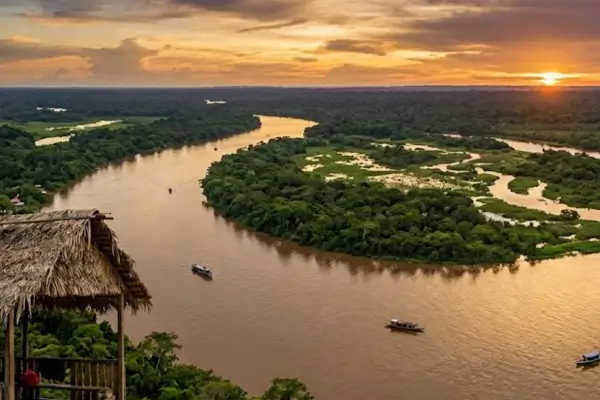
The Amazon River undergoes extremely significant transformations during low-water periods. The gradual reduction in water level completely changes the river landscape, exposing natural structures that remain submerged during much of the year.
These changes directly alter water circulation, species distribution, and the formation of new productive areas throughout the river system. Submerged timber, fallen branches, sandbanks, narrow channels, and transition zones begin to play an even more important role in fish concentration.
In addition, the reduction in water volume decreases the available space for movement, causing many species to concentrate in specific regions of the river.
For this reason, correctly interpreting the environment during low-water periods becomes essential for locating productive areas and better understanding fish behavior during this phase.
Transformations of the Amazon River During Low-Water Periods
During low-water conditions, the Amazon River displays visible structural changes throughout much of its course.
Areas that were previously deep begin revealing sandbanks, expanded shorelines, and submerged formations that completely modify environmental dynamics.
Many secondary channels also experience major reductions in water flow, altering the natural corridors used by fish.
These transformations create new concentration points and significantly change species distribution throughout the river.
Exposure of Natural Structures and Formation of New Productive Areas
As water levels drop, previously hidden natural structures begin directly influencing fish movement.
Submerged timber, roots, partially submerged trees, and bottom formations create shelter zones and differentiated water circulation.
These structures also frequently accumulate natural food carried by residual current flow.
As a result, many fish remain near these regions during much of the low-water period.
The exposure of these structures also makes productive locations easier to identify visually.
Remaining Water Corridors and Species Concentration
During low-water periods, water circulation becomes more concentrated within specific river corridors.
These remaining channels concentrate much of the species movement, especially in areas where flow remains stable.
Small baitfish and aquatic organisms are also naturally directed toward these corridors due to the overall reduction in water volume.
As a result, predatory species commonly move actively through these regions.
Correctly identifying the main active corridors greatly improves environmental interpretation.
Influence of Water Level Reduction on Fish Distribution
Lower water levels deeply alter species positioning.
Many fish leave shallow regions that no longer provide adequate circulation and move toward pools, deeper channels, and moderate-current areas.
The reduction of available space also increases fish concentration in specific river sections.
This redistribution makes certain areas extremely productive during specific stages of the low-water season.
Sandbanks and Newly Exposed Transition Areas
Sandbanks become highly important during the Amazon’s low-water period.
These formations create new current lines, small depth changes, and differentiated water circulation zones.
Transition areas between sand, mud, and firmer bottom composition also frequently concentrate significant activity.
Many species use these regions as movement corridors between deeper areas.
Shelter Zones Created by Submerged Timber and Vegetation
Partially exposed timber and vegetation form important shelter zones during low-water conditions.
These structures reduce current intensity in certain locations and create more stable regions.
Small aquatic organisms also frequently remain close to these protected areas.
As a result, several species use these structures as temporary holding and feeding locations.
Fish Movement Between Deep Pools and Shallow Areas
During low-water periods, many fish alternate movement between deeper areas and nearby shallow regions.
Pools function as primary holding zones, while shallow areas may display increased activity during specific times of day.
Small connecting channels between different depths also frequently become extremely productive corridors.
Observing these movements greatly helps interpret species behavior.
Reading Newly Revealed Shorelines During Water Reduction
Low-water conditions expose new shoreline formations throughout the Amazon River.
Roots, small water inlets, exposed banks, and previously submerged vegetation begin directly influencing water circulation and fish movement.
Many newly exposed shorelines also create shaded regions and moderate-flow areas heavily used by fish species.
Correctly interpreting these changes significantly improves river-reading efficiency.
Concentration of Aquatic Life in Remaining Deep Water Areas
Deeper areas become extremely important during low-water periods.
Remaining deep pools concentrate large amounts of aquatic life due to stable depth and water circulation.
Many species use these regions as primary holding zones during periods of significant water reduction.
The concentration of baitfish and aquatic organisms in these areas also attracts predatory species.
Adjusting Environmental Observation Throughout the Low-Water Season
The behavior of the Amazon River continuously changes as the low-water season progresses.
Areas that are productive early in the season may display completely different characteristics weeks later.
For this reason, environmental observation must remain constant and adaptable.
Changes in water flow, exposure of new structures, and modification of primary corridors directly influence fish distribution.
Adaptability significantly improves river interpretation.
Influence of Residual Current on the Formation of Productive Areas
Even with reduced water levels, current flow continues shaping species distribution.
Residual flow creates narrow channels, differentiated circulation zones, and small convergence areas that become highly productive.
Many fish also use these currents for movement between different river sectors.
Understanding residual current behavior greatly helps identify the best fishing areas.
How Water Clarity Affects Species Behavior
In certain sections of the Amazon River, low-water conditions may increase water clarity.
This change alters fish positioning, especially in shallower and more open areas.
Many species begin using structures, shaded zones, and deeper regions more frequently.
Changes in water clarity also directly influence activity throughout the day.
Importance of Side Areas During Low-Water Conditions
Side areas of the river frequently become highly important during low-water periods.
Small marginal channels, protected inlets, and moderate-flow regions may concentrate significant activity.
These areas also usually provide greater stability compared to the main channel.
Many species use these regions for movement and temporary holding.
Species Adaptation to Environmental Changes
Amazon River fish species display strong adaptability to changes created by low-water conditions.
As water levels decrease, species reorganize movement, feeding, and holding patterns.
Different species also respond differently to environmental changes.
Observing these patterns greatly helps interpret river behavior accurately.
Common Mistakes When Reading the River During Low-Water Periods
Some mistakes greatly reduce the ability to identify productive areas:
- Ignoring remaining water corridors
- Fishing only in open areas
- Failing to observe newly exposed structures
- Overlooking depth changes
- Ignoring fish movement between pools and shallow areas
- Failing to adapt interpretation as low-water conditions progress
- Fishing too far from natural shelter zones
Avoiding these mistakes significantly improves environmental interpretation.
Low-water periods on the Amazon River deeply transform the environmental structure and create new opportunities for identifying productive areas.
The combination of exposed structures, remaining water corridors, deep pools, and shelter zones directly influences species distribution throughout the river.
In addition, understanding the changes created by lower water levels helps anglers locate far more efficient fishing areas throughout the low-water season.
With constant observation and continuous adaptation, reading the Amazon River becomes increasingly precise, allowing a deeper understanding of the dynamics of this enormous river system.