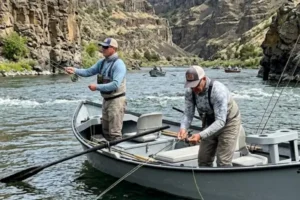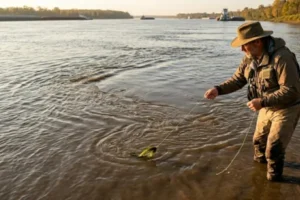
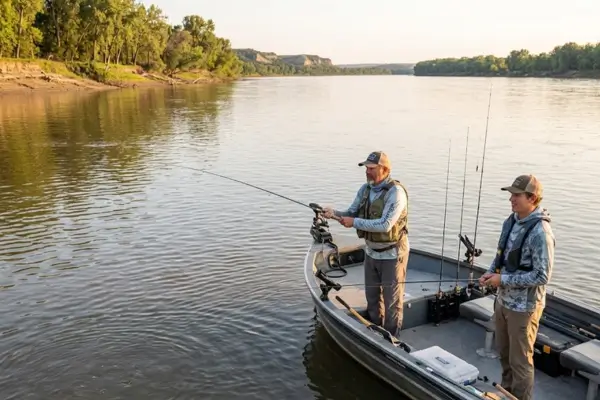
The Missouri River undergoes important behavioral changes during periods of high temperature. Under these conditions, many fish species begin seeking deeper and more stable regions, where the water provides more balanced thermal conditions and circulation.
In addition, rising temperatures alter oxygen distribution, influence current intensity, and modify movement patterns throughout the river. As a result, certain deep areas become extremely productive at different times of the day.
For this reason, properly evaluating the deepest sections of the Missouri requires constant environmental observation, interpretation of water dynamics, and understanding of the natural structures present in the main channel.
Behavior of the Missouri River During High-Temperature Periods
During warmer periods, the Missouri River experiences important environmental changes.
Higher temperatures modify water circulation in some sections and directly influence fish movement.
The increased intensity of sunlight also amplifies thermal differences between shallow and deep areas.
As a result, many fish adjust their holding and movement patterns throughout the day.
These changes make deep areas even more important during hotter periods.
Migration of Species Toward Deeper and More Stable Zones
Many species move toward deeper regions during periods of elevated temperature.
These areas usually provide more stable conditions regarding circulation, temperature, and light exposure.
Deep sections also help fish maintain more balanced movement patterns throughout the day.
In many situations, species that remain at intermediate depths during the morning gradually shift into deeper areas as temperatures rise.
This continuous movement directly influences fish distribution throughout the river.
Identifying Pockets of Cooler Water in the Main Channel
Even during intense heat, the Missouri River may contain pockets of relatively cooler water within certain sections of the main channel.
These regions commonly appear near depth changes, incoming current variations, and areas with constant circulation.
Small thermal differences are often enough to significantly alter fish positioning.
Fish frequently remain near these zones during the hottest hours of the day.
Influence of Depth on Fish Distribution
Depth strongly influences species distribution throughout the Missouri River.
Deep areas generally provide greater thermal stability and reduced direct exposure to intense sunlight.
Gradual depth changes also create natural travel corridors used by fish when moving between different sections of the river.
Transitions between deep and intermediate areas frequently display significant movement during much of the day.
Softer Current Areas Within the Deep Main Channel
Even inside the main river channel, there are regions where current intensity decreases.
These areas form near bottom contour changes, submerged structures, and natural channel formations.
Many fish use these moderate-flow zones to remain close to major circulation areas without constantly facing strong current.
These locations frequently concentrate significant activity during warmer periods.
Submerged Structures as Concentration Points for Aquatic Life
Submerged structures play an extremely important role within the deeper areas of the Missouri River.
Submerged timber, rocks, depressions, and natural formations alter water circulation and create favorable environments for different aquatic organisms.
These structures also frequently function as shelter and feeding areas.
As a result, many species remain close to these regions during periods of elevated temperature.
Reading Natural Shadows Created by Shorelines and Vegetation
Natural shade strongly influences fish behavior during warmer days.
High banks, trees, and shoreline vegetation create regions with reduced direct sunlight exposure.
These areas also frequently maintain more stable temperatures throughout the day.
Many species use these shaded zones as temporary holding and travel areas.
Transitions Between Deep Areas and Shallow Flats
Transitions between deep sections and shallow flats are among the most important locations on the Missouri River.
These regions function as natural movement corridors between different depth levels.
Many fish use these areas to alternate between deep holding periods and movement into shallower water during specific times of the day.
Gradual depth changes frequently concentrate significant activity.
Oxygen Concentration in Specific Sections of the Channel
Water oxygenation becomes an even more important factor during periods of elevated temperature.
In certain channel sections, water circulation promotes greater oxygen renewal and distribution.
These locations frequently appear near moderate current, submerged structures, and transition areas.
Many species also seek more oxygen-rich regions during the hottest hours of the day.
Adjusting Observation According to Time of Day and Sunlight
The behavior of the Missouri River changes considerably throughout the day during warm periods.
In the early morning, many species remain at intermediate depths or near shorelines.
As sunlight intensity increases, fish tend to move toward deeper and more stable regions.
Late afternoon also frequently brings renewed movement into shallower areas.
Continuously adapting environmental observation significantly improves river interpretation.
Influence of Water Circulation on Species Positioning
Water circulation directly influences the areas selected by fish during periods of elevated temperature.
Regions with constant flow usually provide more balanced temperature and oxygen conditions.
Continuous water movement also helps distribute natural food throughout the channel.
For this reason, many species remain close to these areas for much of the day.
How Light Changes Affect Fish Behavior
Sunlight intensity directly affects species positioning throughout the Missouri River.
During periods of stronger light, many fish seek deeper areas, submerged structures, and shaded zones.
Under softer lighting conditions, many species increase movement through intermediate and shallow regions.
Observing these changes greatly helps interpret river activity throughout the day.
Importance of Reading Shorelines in Deep Areas
Even in deeper sections, shorelines continue exerting strong influence on species behavior.
Water entries, shoreline vegetation, and small inlets create differentiated circulation and stability zones.
Many species also use these areas as travel routes between different depths.
Correctly interpreting shorelines greatly improves environmental reading.
Species Adaptation to Warm Conditions
Missouri River fish species display strong adaptability to temperature increases.
Throughout the day, species constantly reorganize their movement and holding patterns.
Different species also respond differently to thermal changes in the environment.
This continuous adaptation directly influences fish distribution within the deeper sections of the river.
Common Mistakes When Evaluating Deep Areas
Some mistakes greatly reduce the ability to identify productive regions:
- Ignoring moderate-current zones
- Fishing only the deepest areas
- Failing to observe light changes
- Overlooking submerged structures
- Ignoring transitions between depths
- Staying too far from structured shorelines
- Failing to adapt interpretation according to time of day
Avoiding these mistakes significantly improves environmental interpretation.
Evaluating deep areas on the Missouri River during periods of elevated temperature requires continuous observation, interpretation of water circulation, and understanding of species behavior changes.
The combination of depth, moderate current, submerged structures, oxygen-rich zones, and shaded areas creates extremely productive environments throughout the river.
In addition, understanding how temperature and sunlight alter movement patterns helps identify far more efficient locations during warmer periods.
With practice and continuous adaptation, reading the Missouri River becomes increasingly precise, allowing a better understanding of the dynamics within the deep sections of this important river system.