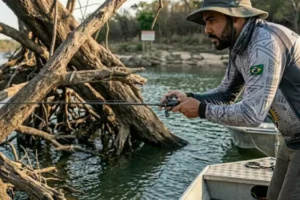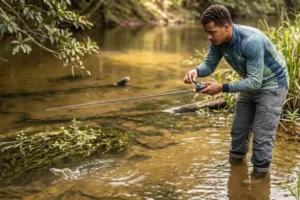
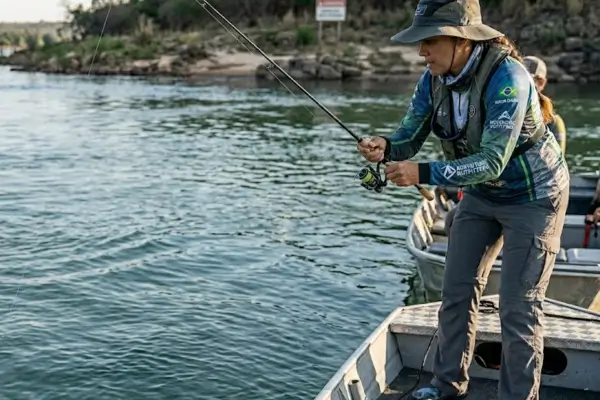
Lure retrieval speed is one of the most important factors when fishing for predatory species in rivers with open areas. In wide environments where fish have more room to move, small adjustments in presentation rhythm can completely change the response observed during the fishing session.
Under these conditions, lure movement must match not only fish behavior, but also factors such as current, light conditions, depth, and activity levels throughout the day.
In addition, open areas allow anglers to vary speed more freely, making it possible to explore different water layers and keep the lure longer inside productive zones.
With practice and constant observation, anglers can identify response patterns and adjust lure action much more efficiently.
Different Reaction Speeds of Predatory Species
Each predatory species reacts differently to lure movement.
Some respond better to fast and continuous presentations, while others show more interest in slower and more irregular movements.
In addition, the same fish may react differently depending on environmental conditions and fishing periods throughout the day.
In open areas, this variation becomes even more noticeable because fish have greater freedom of movement.
For this reason, continuously adapting retrieval speed is essential for finding the most effective rhythm.
Reading the Open Area Before Defining the Retrieval Rhythm
Before beginning lure action, it is important to analyze the characteristics of the environment.
Open areas present different combinations of depth, current, and water movement, all of which directly influence the ideal retrieval speed.
Regions with stronger current usually require different adjustments compared to calmer water sections.
Changes in water color, isolated structures, and surface variations also help indicate which retrieval speeds may work best in each location.
Careful environmental reading reduces random attempts and improves presentation efficiency.
Continuous Speed to Cover Larger Areas
Continuous retrieval is a highly efficient strategy in open areas.
This rhythm allows anglers to cover large sections of water in an organized manner, increasing the chances of locating active fish.
Continuous speed also helps maintain depth control and keeps lure trajectory more stable.
In many cases, linear presentations make lure movement stand out better in environments with fewer obstacles.
Even when using continuous retrieval, small speed variations throughout the retrieve help create a more natural presentation.
Rhythm Changes to Trigger Reaction Strikes
Alternating retrieval speed during lure action is one of the most effective techniques for triggering responses from predatory fish.
Quick transitions between acceleration and deceleration create less predictable underwater behavior.
This movement pattern often increases lure visibility and stimulates faster reactions.
In open areas where fish have a wide movement range, rhythm variation helps maintain a more dynamic presentation.
The combination of smooth movement and short accelerations greatly improves lure action efficiency.
Using Short Accelerations to Highlight the Lure
Short accelerations work as additional triggers during retrieval.
These sudden speed changes modify lure behavior and create different underwater vibrations.
In many cases, small accelerations near depth changes or isolated structures significantly increase fish attention.
Controlled accelerations also help quickly alter lure trajectory without sacrificing stability.
This technique is especially useful in open areas with large spaces for lure movement.
Reducing Speed to Extend Exposure Time
Reducing retrieval speed can be extremely effective in certain situations.
Slower rhythms increase the amount of time the lure remains inside the productive zone, allowing a more detailed presentation.
This strategy often works well in areas where fish display more cautious behavior or reduced movement.
In addition, slower retrieval improves depth control and allows finer adjustments during presentation.
In many situations, small pauses combined with slow retrieval further increase presentation efficiency.
Synchronizing Retrieval and Rod Movement
Lure action depends on more than just reel retrieval speed.
Synchronization between retrieval and rod movement directly influences presentation behavior.
Soft rod twitches add irregularity to lure movement, while continuous rod positioning maintains greater stability.
When properly synchronized, these elements create a more natural and controlled presentation.
This coordination also helps anglers quickly adjust rhythm according to fish response during the session.
Adjustments Based on Fish Activity Throughout the Day
Predatory fish behavior changes considerably throughout the day.
During periods of higher activity, faster and more dynamic presentations usually work better.
In calmer periods, slower and more controlled presentations often produce better results.
For this reason, observing the first interactions during the fishing session is essential for determining the most effective retrieval speed.
The ability to adapt continuously greatly improves presentation consistency.
Identifying the Ideal Rhythm Through Initial Interactions
The first responses observed in the water provide important information about fish behavior.
Movements near the lure, surface changes, or subtle reactions during retrieval help indicate whether the chosen rhythm is effective.
Based on these responses, anglers can speed up, slow down, or vary the presentation until finding the most productive pattern.
This continuous adjustment process is one of the most important skills in open-water fishing.
The faster the angler interprets these signals, the greater the fishing efficiency tends to become.
Current Influence on Lure Speed
River current directly affects the lure’s actual underwater speed.
In stronger current areas, the lure may move faster even with moderate retrieval.
In calmer sections, anglers often need to slightly increase speed to maintain good lure movement.
Understanding this influence helps improve retrieval adjustments according to each section of the river.
Depth Control During Lure Action
Retrieval speed also changes lure depth.
Faster rhythms usually keep the lure in shallower layers, while slower speeds allow it to remain longer in deeper sections.
This control becomes especially important in open areas with varying depths throughout the retrieve.
Adjusting speed and depth together significantly improves presentation efficiency.
Equipment Adjustments for Better Speed Control
The equipment used directly affects lure speed control.
More sensitive rods improve movement perception, while balanced reels help maintain consistent retrieval speed.
Proper line selection also contributes to better trajectory and depth control.
A balanced setup makes it easier to perform quick rhythm changes during the fishing session.
Common Mistakes When Controlling Retrieval Speed
Some mistakes greatly reduce presentation efficiency in open areas:
- Working the lure at the same speed during the entire retrieve
- Ignoring fish responses observed in the water
- Using excessive accelerations without control
- Failing to adapt rhythm according to the current
- Retrieving too quickly in deeper areas
- Maintaining repetitive movements throughout the fishing session
Avoiding these mistakes greatly improves presentation naturalness.
Adjustments in lure retrieval speed are fundamental when fishing for predatory species in rivers with open areas.
The combination of continuous retrieval, rhythm variation, short accelerations, and strategic pauses allows anglers to create more dynamic and efficient presentations.
In addition, environmental reading and interpretation of initial fish responses help define the most effective pattern for each situation.
With practice and continuous adaptation, anglers develop greater control over lure behavior and improve presentation consistency throughout the fishing experience.