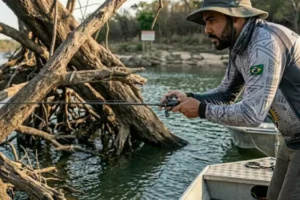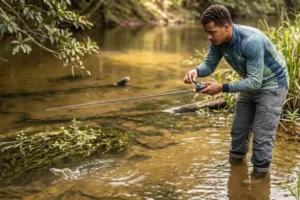
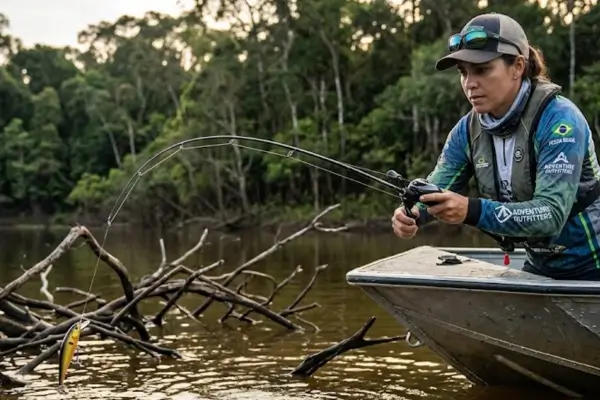
Lure working in areas with submerged brush requires constant attention to how the lure moves through the structure. This type of environment creates natural zones of shade, passage, and concentrated activity, where active fish tend to position themselves strategically.
Presentation efficiency depends on the combination of boat positioning, depth control, working rhythm, and continuous reading of fish response. Small adjustments in execution can significantly change how the lure is perceived within the structure.
In structured environments, it is not enough to simply cast the lure to the correct spot. It is necessary to maintain control throughout the entire trajectory, from entry to exit of the brush area.
Influence of Brush Structures on Fish Behavior
Submerged brush creates complex structures that directly influence fish behavior. These areas provide shelter, shade, and movement corridors, forming natural concentration zones.
Active fish tend to position themselves along the edges of these structures or in small gaps between branches, where they can better observe movement in the surrounding water.
These structures also modify water flow, creating small current variations that affect lure movement. In some spots, water may move more slowly, while in others circulation is stronger.
This diversity within a single structure requires continuous adaptation in lure presentation.
Boat Positioning for Better Lure Presentation
Boat positioning is one of the most important factors for effective presentation in areas with submerged brush. The boat’s position defines the casting angle and level of control during retrieval.
Maintaining an appropriate distance from the structure allows for more accurate casts and reduces direct interference with branches.
In many cases, small adjustments in boat position are enough to significantly improve lure trajectory within the structure.
The goal is to find an alignment that allows the lure to be worked naturally inside the target area while maintaining full control.
Adjusting Lure Entry Angle Near Structures
The entry angle of the lure determines how it behaves when reaching the brush area. A well-adjusted angle allows the lure to enter the structure in a controlled and predictable way.
Steeper angles may cause the lure to pass over the intended area or reduce its time of action within the structure.
Shallower angles, on the other hand, may limit access to deeper or more specific zones.
Balancing these two extremes is essential for efficient presentation.
Working Rhythms to Stimulate Movement in Structured Areas
The lure working rhythm is one of the main factors in stimulating fish response in submerged brush areas.
Slower rhythms allow the lure to remain longer in the target zone, increasing the chance of interaction.
Faster rhythms can be used to attract attention in more open areas or simulate stronger movement patterns.
Alternating rhythm within the same retrieve is also effective, as it creates variation in lure behavior that can trigger more interest.
Strategic Pauses to Increase Fish Interest
Pauses during lure working are essential in structured environments. These interruptions simulate natural behavior and help increase fish interest.
In brush areas, the lure often remains visible longer in specific spots, especially near vertical or horizontal structures.
Short and well-timed pauses create variation in lure movement without losing control of the presentation.
These pauses also allow the lure to explore small openings within the structure more effectively.
Depth Control During Lure Working
Depth control is essential in submerged brush areas. The lure must stay within the active zone where fish are positioned without getting caught in structures.
The type of lure chosen directly influences this control, as does the retrieval method.
In some cases, small changes in retrieval speed can significantly affect working depth.
Maintaining this balance is important to avoid losing control during the presentation.
Keeping the Lure in the Active Zone Longer
Keeping the lure in the active zone is one of the main objectives in structured areas. This requires continuous control of trajectory and adaptation to environmental conditions.
Adjustments in retrieval rhythm help extend the time the lure stays within the productive zone.
It is also important to avoid overly fast movements that may cause the lure to leave the target area too quickly.
The longer the lure remains in the correct zone, the higher the chance of interaction.
Adjusting Lure Work According to Fish Response
Fish response must be constantly observed during lure working. In many cases, fish may follow the lure without immediate interaction.
These responses are important indicators for adjusting rhythm, pauses, or even working depth.
The ability to adapt during retrieval improves presentation efficiency under different conditions.
Small adjustments based on fish behavior can lead to more consistent results.
Synchronization Between Rod Actions and Line Retrieval
Synchronization between rod movements and line retrieval is essential to maintain lure control in submerged brush areas.
Well-coordinated movements help maintain a consistent displacement pattern.
This coordination also prevents the lure from losing stability within the structure.
The combination of light rod actions and continuous retrieval allows better presentation control.
Influence of Structure on Lure Trajectory
Submerged brush directly influences lure trajectory during retrieval. In some areas, the lure may be redirected by branches or water flow variations.
This interaction should be considered a natural part of the environment.
Instead of avoiding these zones completely, the goal is to learn how to work within them by adjusting control as needed.
Common Mistakes in Lure Working in Submerged Brush
Some mistakes can reduce efficiency when working lures in structured areas:
- Constant retrieval rhythm without variation
- Poor depth control during the presentation
- Improper boat positioning
- Excessively fast lure working speed
- Lack of strategic pauses
- Failure to adapt to fish response
Avoiding these mistakes helps maintain a more consistent and efficient presentation over time.
Expanding Efficiency in Structured Environments
Efficiency in submerged brush environments depends on continuous adaptation. Each structure may present different characteristics, requiring ongoing adjustments in technique.
Environmental reading and fish response observation are essential for improving performance over time.
With practice, lure control becomes more natural and precise.
Lure working in areas with submerged brush and active fish requires technical control, environmental reading, and constant adaptation. Boat positioning, working rhythm, and depth control are key factors for effective presentation.
When properly executed, these techniques allow efficient exploration of structured areas and improve consistency of fish interaction throughout navigation.
Continuous practice and the ability to adjust based on environmental conditions are essential for achieving better results in submerged structure environments.