
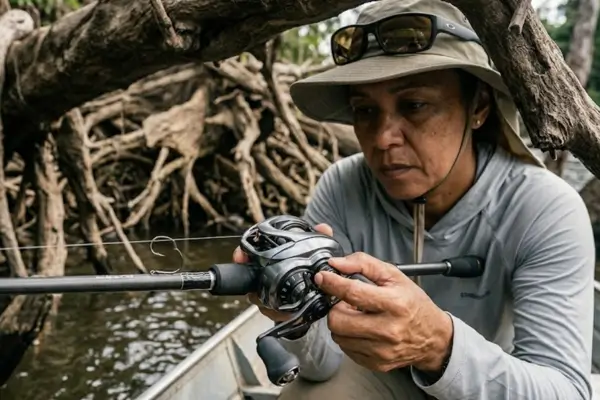
Properly adjusting the baitcasting reel brake is one of the most important factors for achieving accuracy when casting in environments with limited space between natural structures. In river areas with submerged branches, logs, and aquatic vegetation, equipment control must be more refined since small variations can completely change where the lure lands. The braking system …
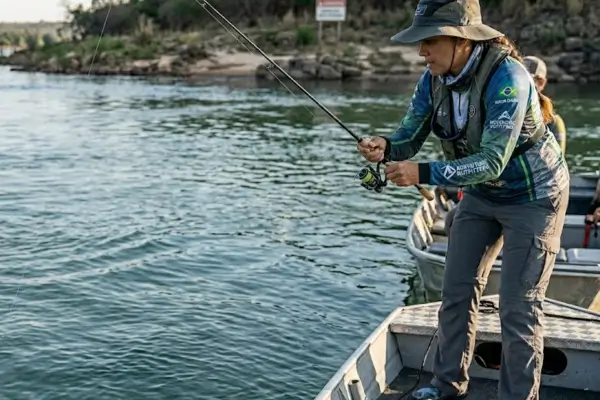
Lure retrieval speed is one of the most important factors when fishing for predatory species in rivers with open areas. In wide environments where fish have more room to move, small adjustments in presentation rhythm can completely change the response observed during the fishing session. Under these conditions, lure movement must match not only fish …
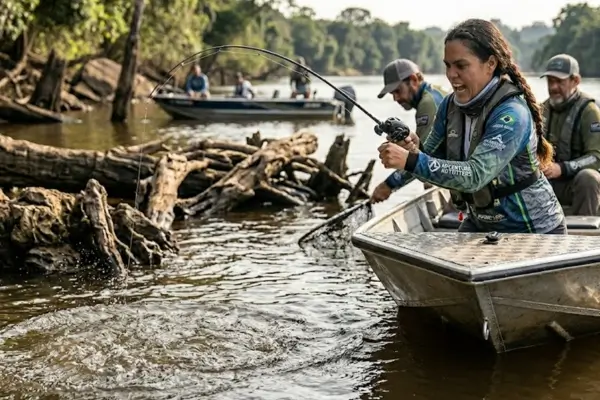
The hookset is one of the most important stages of boat fishing, especially in environments with submerged structures and hard-mouthed fish. In these situations, it is not enough to simply notice contact with the lure. The angler must execute the movement at the correct moment, with proper intensity, while maintaining full control of the setup. …
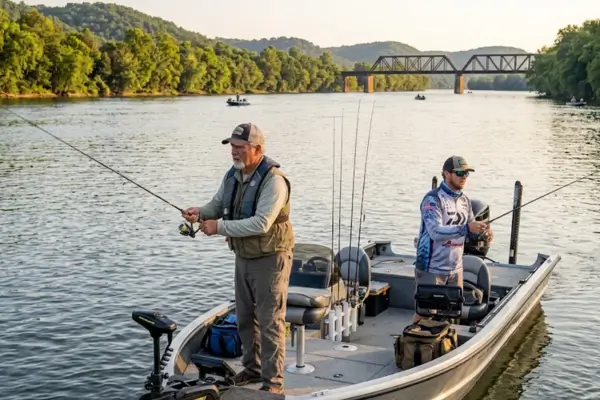
The Tennessee River features a river system marked by wide bends, well-defined meanders, and constant changes in current behavior. These characteristics create highly dynamic environments where water circulation directly influences fish distribution throughout the river. During periods of increased activity, many species use bends and meanders as movement corridors, feeding areas, and temporary holding zones. …
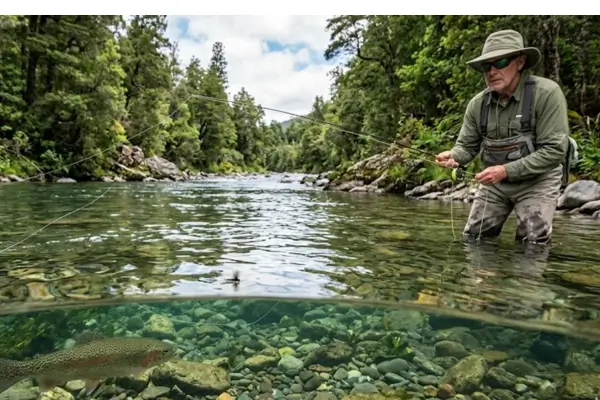
The use of fluorocarbon fishing lines in clear-water rivers is a very common choice when the goal is to improve presentation in situations where fish display more cautious behavior. In high-visibility environments, every detail of the fishing setup can influence how fish react, making line selection a central part of the strategy. Fluorocarbon stands out …
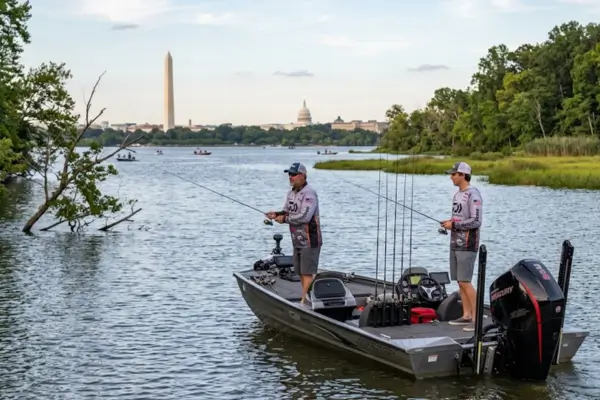
The Potomac River features many sections marked by strong shoreline vegetation, natural fallen branches, exposed roots, and floating plant cover. These environments create highly dynamic conditions that directly influence water circulation, natural food distribution, and the behavior of predatory species. In addition, the combination of shade, submerged structures, and narrow circulation corridors transforms many sectors …
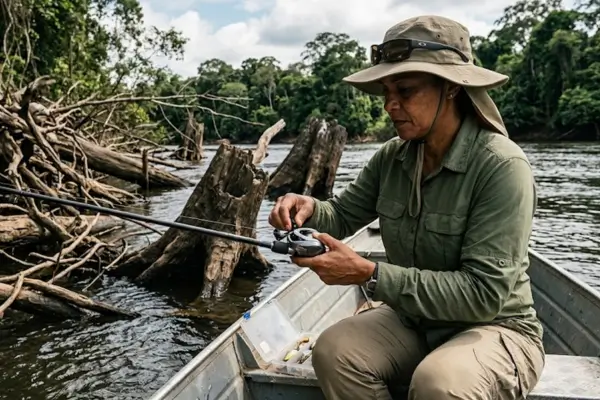
Fishing near submerged logs, branches, roots, and other natural structures requires a high level of equipment control. These environments are highly complex and directly influence the behavior of the fishing line, lure, and rod and reel setup. In these conditions, having quality equipment alone is not enough. It is necessary to understand how each component …
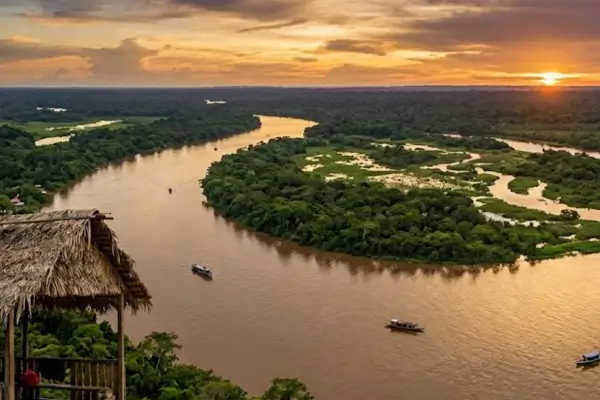
The Amazon River undergoes extremely significant transformations during low-water periods. The gradual reduction in water level completely changes the river landscape, exposing natural structures that remain submerged during much of the year. These changes directly alter water circulation, species distribution, and the formation of new productive areas throughout the river system. Submerged timber, fallen branches, …
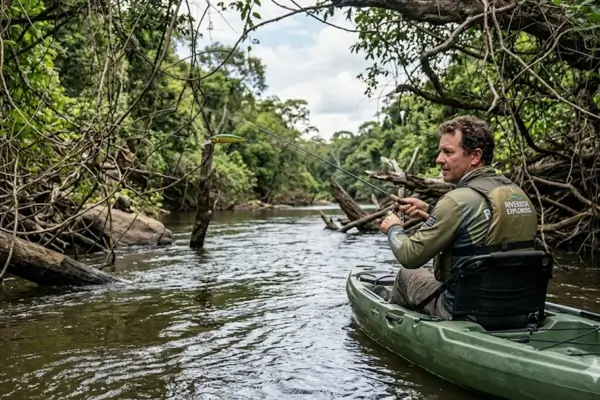
Fishing in rivers with banks covered by dense vegetation requires constant adaptation of casting techniques. Low branches, exposed roots, leaning logs, and foliage hanging over the water completely change how the lure must be presented. In this type of environment, precision and control become more important than casting distance. In many cases, the best spots …
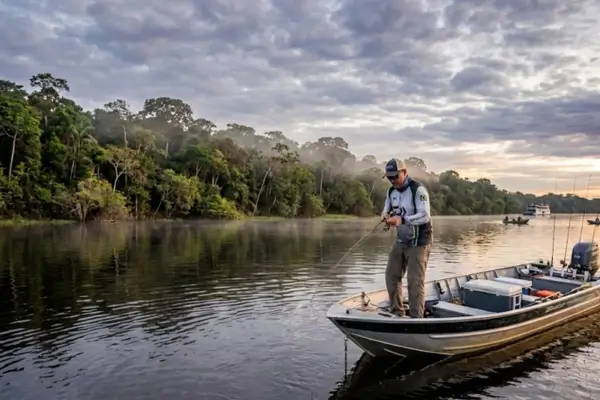
The Rio Negro is one of the best-known rivers in the Amazon region and is especially recognized for the dark coloration of its waters. This characteristic creates a very unique environment where light conditions, visibility, and water circulation directly influence fish behavior. The natural composition of the water, rich in dissolved organic matter, significantly reduces …